
What is XPS panel and What are the Packaging solutions for XPS Panel?
What are XPS boards?
XPS (Extruded Polystyrene)—similar to EPS (Expanded Polystyrene)—is a rigid polystyrene board commonly used for thermal insulation in walls and roofs.
What are the market applications for XPS boards?
As an insulation material with a closed-cell structure, XPS is widely used in both building renovation and new construction projects.
Common Applications
- Building Insulation: Used as an insulation layer for cavity walls, exterior walls, flat or pitched roofs, basements, and underfloor heating systems.
- Tile Backer Boards: Often surfaced with a fiberglass mesh and cement mortar, these boards serve as waterproof backing panels for areas such as showers, spas, steam rooms, and countertops.
- Composite Sandwich Panels: Serving as a lightweight insulating core, these are bonded between various protective “facings” (such as FRP, aluminum, steel, PVC, or plywood). Such panels are frequently used in the construction of refrigerated truck bodies, cargo containers, and modular buildings.
How do XPS boards differ from other insulation materials?
To meet large-scale market demand and ensure rapid, efficient supply, the production process for XPS insulation boards typically limits them to standardized, fixed dimensions—most commonly in square or rectangular shapes.
What packaging solutions are available for XPS boards?
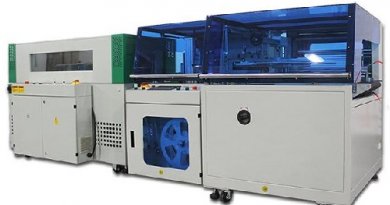
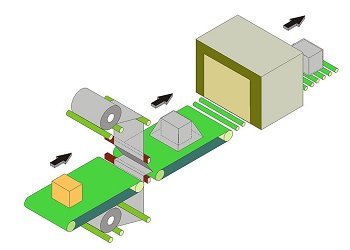
There are two primary methods for packaging XPS insulation foam boards: stretch wrapping and shrink wrapping. Orbital stretch wrapping machines use stretch film to wrap bundles of foam boards, though the ends of the bundles typically remain open. For shrink wrapping, various equipment options exist: sleeve-style shrink wrappers can wrap bundles on four sides with fewer restrictions on board dimensions, while side sealing shrink wrappers provide a complete seal—though these are generally suited only for products with specific, fixed dimensions.


What are the advantages of packaged XPS boards compared to unpackaged ones?
1. Storage: Packaging protects XPS boards from damage caused by moisture, oxidation, and dust, thereby extending their shelf life.
2. Transportation: Compared to loose, unpackaged boards, packaged XPS boards are easier and more efficient to handle. Furthermore, packaged boards occupy less space, allowing for a greater quantity of product to be loaded per shipment.
3. Sales: Packaged XPS boards are more visually appealing to customers, which can help increase the likelihood of a purchase. Additionally, packaging simplifies product counting and inventory management.
Conclusion:
XPS board is a modern insulation material used on a large scale. Packaging these boards is straightforward, with a variety of solutions and equipment options available. Since packaging plays a critical role in the storage, transportation, and sale of XPS boards, selecting the right packaging equipment is essential for any company operating in this industry.